

Outfit or Exhibit? Dressing Like Fashion Is Art (Because It Is)
Every year, the Met Gala feels like fashion’s version of the Olympics—months of anticipation, endless online discourse, and a red carpet full of looks that are either breathtaking, confusing, or both. But this year’s theme, Fashion is Art, felt especially compelling because it blurred the line between clothing and creative expression more than ever before. Instead of simply dressing for spectacle, celebrities and designers approached the carpet like a gallery space—referencing paintings, sculpture, texture, architecture, and craftsmanship in ways that transformed garments into wearable art. Some looks felt like they had stepped directly out of a Claude Monet painting, others resembled marble statues or gilded Gustav Klimt portraits. Watching the carpet unfold made one thing very clear: fashion has never just been about getting dressed. It’s storytelling, interpretation, and artistry—just in a form you can wear. See some of my favorite looks from the night below!
Sabrina Carpenter in Dior SZA in Bode Tessa Thompson in Valentino Emma Chamberlain in Mugler Sombr in Valentino Anne Hathaway in Michael Kors Collection Naomi Osaka in Robert Wun Ayo Edebiri in Chanel Zoë Kravitz is YSL
Marble Muse
One of the strongest interpretations of the theme came through sculptural, statue-inspired dressing—looks that felt less sewn and more carved into place. Kendall Jenner embodied this perfectly in a draped ivory gown inspired by the Winged Victory of Samothrace. The soft folds and asymmetrical draping mirrored the movement of the marble statue, creating that same sense of elegance frozen in motion. Yu Chi Lyra Kuo also referenced the same sculpture, but approached it through texture rather than silhouette. Instead of the fluid draping seen in Kendall’s look, hers relied on layered feathers and exaggerated wing-like detailing that emphasized movement and volume.
Kendall Jenner in GapStudio Y-Chi Lyra Kuo in Jean Paul Gaultier
Meanwhile, Kylie Jenner referenced the iconic Venus de Milo with a corseted silhouette and off-the-shoulder draping that felt both romantic and statuesque. What made these looks so compelling is that they proved fashion doesn’t need embellishment to feel artistic. There’s something incredibly powerful about simplicity when the focus becomes shape, proportion, and the way fabric moves around the body. In many ways, these looks also highlighted the idea of the human body itself as art—fashion acting almost like a frame or extension of the figure rather than something separate from it. The gowns weren’t trying to imitate sculpture exactly; they were bringing it to life, transforming the wearer into part of the artwork itself.
Kylie Jenner in Schiaparelli
What makes sculptural dressing feel so compelling right now is the way it turns the body itself into part of the artwork. The draped pleating, asymmetrical lines, and fluid folds in these pieces instantly recall classical marble sculptures — the kind of silhouettes that look frozen in motion. Rather than relying on heavy embellishment, these designs create impact through shape and movement alone. I love how wearable this interpretation feels: a softly draped white top paired with simple trousers suddenly feels statuesque, while pleated dresses with wrapped detailing evoke Grecian sculpture in a way that still feels modern and effortless. The palette staying almost entirely ivory and stone-toned makes the pieces feel even more timeless, like something carved rather than sewn. Styled minimally with sleek sandals and understated jewelry, these looks prove that sculptural fashion doesn’t have to stay on the Met Gala carpet — it can exist beautifully in everyday life through silhouette, drape, and the quiet art of construction. Shop some of my sculpture-inspired pieces below!


Wearing a Painting: Gustav Klimt
While some celebrities leaned into sculpture, others approached the theme through painting—specifically the work of Gustav Klimt. Hunter Schafer’s look referenced Klimt’s Mäda Primavesi, pulling from the painting’s soft florals, pastel tones, and almost doll-like delicacy. The floral appliqué details, muted blue fabric, and romantic silhouette echoed the portrait without feeling overly literal. It captured the same ethereal quality as the painting—feminine, slightly whimsical, and intentionally imperfect.
Hunter Schafer in Prada Gustav Klimt’s "Mäda Primavesi"
In contrast, Gracie Abrams, wearing Chanel, drew inspiration from Klimt’s Portrait of Adele Bloch-Bauer I, leaning into the painting’s signature gold tones and mosaic-like ornamentation. The intricate embellishment and metallic texture of her gown mirrored the layered pattern work of the portrait, almost making the dress look gilded under the light. Seeing the two looks side by side highlighted how expansive Klimt’s work really is—one interpretation soft and painterly, the other richly decorative and opulent—yet both translated seamlessly into fashion with the wearer becoming the subject of the painting itself.
Gracie Abrams in Chanel
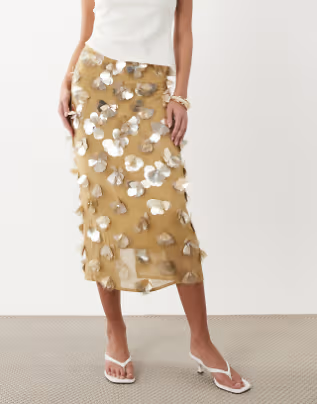
Klimt-inspired dressing translates beautifully into everyday fashion because it embraces ornamentation in a way that still feels soft and romantic rather than overly formal. The rich gold tones, shimmering embellishments, and delicate florals seen on the carpet this year felt lifted directly from Klimt’s paintings, where texture and decoration become part of the emotion of the work itself. I love how these pieces reinterpret that idea through wearable silhouettes — a sequined floral dress that catches the light like gilded brushstrokes, sheer embroidered fabrics that feel almost tapestry-like, or soft pastel florals that echo the dreaminess of Mäda Primavesi. Even the more minimal pieces still carry that sense of artful detail through texture, embroidery, and movement. Styled casually with simple heels, a knit thrown over the shoulders, or everyday jewelry, these looks bring a little bit of Klimt’s romantic maximalism into real life without feeling costume like.




Seurat, Stitched Together: A Sunday on the Runway
Ben Platt’s custom Tanner Fletcher look translated Georges Seurat’s A Sunday on La Grande Jatte into something unexpectedly playful and wearable. Instead of recreating the painting literally, the suit distilled its most recognizable elements—the soft grassy greens, pale blue sky, tiny strolling figures, and dreamlike park scenery—into delicate embroidery scattered across the tailoring. The faded ombré coloring almost mimicked Seurat’s pointillism from a distance, where hundreds of tiny details blur together into one atmospheric image. What I loved most was how the look captured the feeling of the painting rather than just copying it. Seurat’s work is quiet, leisurely, and romantic, and the suit carried that same charm while still feeling modern.
Benn Platt in Tanner Fletcher Georges Seurat’s "A Sunday Afternoon on the Island of La Grande Jatte"
The easiest way to bring this painterly tailoring trend into everyday dressing is through pieces that feel like wearable landscapes. These dresses capture that same impressionist softness as Ben Platt’s Seurat-inspired suit, turning artwork into something effortless and modern. What makes these pieces work is that they don’t feel costume-y or overly literal. From far away they read as beautiful prints and color palettes, but up close the artistic references reveal themselves—almost like discovering brushstrokes in a painting. Shop some of my picks below!



Outfit or Oil Painting? An Homage to Monet
Monet’s water lilies and garden landscapes appeared on the carpet, proving just how naturally Impressionism translates into fashion. The most literal interpretation came through Jessica Kayll's sweeping painted gown covered in watery greens and floating lily pads, echoing the dreamlike texture of Monet’s Water Lily Pond. The brushstroke-like print almost dissolved into movement as the fabric flowed, blurring the line between painting and garment. Alexa Chung’s look took a more understated approach, pulling from Monet’s palette rather than recreating a canvas directly. The chartreuse satin, lily-pad inspired detail at the hip, and soft floral accents felt like stepping into one of Monet’s gardens at golden hour. Both looks captured what makes Impressionism so enduring in fashion: color, light, and atmosphere matter more than precision. Instead of sharp lines and exact imagery, these pieces relied on softness and movement, letting the wearer become part of the artwork itself.
Jessica Kayll "Bridge over a Pond of Water Lilies" by Claude Monet Alexa Chung in Dior
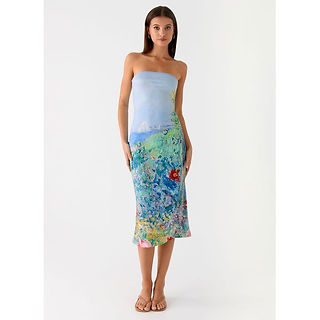
Monet-inspired fashion feels most wearable when approached through mood and color rather than literal recreations of the paintings themselves. Soft watercolor florals, blurred garden motifs, and Impressionist palettes instantly make a piece feel romantic and painterly without being overly literal. I love how these dresses capture that dreamy quality in completely different ways — from sheer, fluid silhouettes that feel almost like brushstrokes in motion to fuller, garden-party shapes that mirror the lushness of Monet’s landscapes. The blue-green tones, hazy florals, and washed textures feel especially wearable because they read more like emotion than print. Styled simply with delicate sandals, soft knits, or even a straw hat, these pieces channel the feeling of wandering through Giverny at golden hour rather than looking overly themed. It’s art-inspired dressing at its most wearable: feminine, atmospheric, and quietly transportive.


The best part about these references is that they translate surprisingly well into everyday dressing. You may not be wearing couture inspired by ancient sculpture or a Klimt painting to dinner, but elements of those looks are already showing up in wearable fashion. The sculptural gowns inspired by marble statues can be interpreted through draped tops, asymmetrical silhouettes, soft pleating, and pieces that emphasize shape and movement rather than embellishment. Meanwhile, the Klimt-inspired looks translate beautifully into floral appliqué, delicate shimmer, tapestry-like prints, and romantic detailing. Even the painterly, impressionist references seen throughout the carpet can be brought into everyday style through watercolor prints, layered colors, and fabrics that feel fluid and organic. What makes these pieces feel elevated is that they don’t just follow trends—they feel intentional, almost collected, like wearing something chosen for its artistry rather than just its practicality.
What made this year’s Met Gala feel so inspiring was the way these artistic references never stayed confined to the carpet. These looks proved that clothing can do more than simply dress the body — it can reference history, evoke emotion, and transform the wearer into part of the artwork itself. What makes these inspirations feel especially exciting right now is how naturally they translate into everyday style. Through texture, silhouette, color, and print, these artistic references become wearable in ways that feel subtle, modern, and deeply personal. Fashion doesn’t have to live only on the Met Gala carpet to feel imaginative; sometimes all it takes is a beautifully draped top, a painterly floral print, or a touch of gold shimmer to make getting dressed feel like its own form of art.
Check out some more of my museum-worth picks on my Shopmy!
xx Patsy


Comments